
Nyungwe National Park represents one of Africa’s oldest and most biodiverse montane rainforests, offering travelers an extraordinary opportunity to explore a pristine ecosystem that has survived virtually unchanged for millions of years. Located in southwestern Rwanda along the border with Burundi, this 1,019-square-kilometer protected area encompasses misty mountain forests, cascading waterfalls, verdant tea plantations, and an astonishing array of wildlife including 13 primate species, over 300 bird species, and rare orchids found nowhere else on Earth. For nature enthusiasts, adventure seekers, and those searching for experiences beyond the typical safari circuit, Nyungwe delivers an immersive rainforest adventure that rivals any destination in Africa.
Understanding Nyungwe National Park
Nyungwe National Park protects one of the largest remaining tracts of montane rainforest in Central and East Africa. The park’s elevation ranges from 1,600 to 2,950 meters, creating diverse microclimates and habitats that support exceptional biodiversity. This ancient forest has remained largely intact for thousands of years.
The park’s most famous residents are its primates. Nyungwe hosts 13 primate species, including habituated chimpanzees, Ruwenzori colobus monkeys (troops numbering over 300 individuals), L’Hoest’s monkeys, and silver monkeys. This primate diversity makes Nyungwe one of Africa’s premier primate-watching destinations.
Beyond primates, Nyungwe supports over 1,050 plant species, including 200 orchid varieties. The forest harbors 85 mammal species and 310+ bird species, including 27 Albertine Rift endemics found nowhere else globally. Birdwatchers seek species like the Rwenzori turaco, red-collared babbler, and Grauer’s warbler.
Nyungwe holds hydrological significance as a major watershed, containing streams feeding both the Nile and Congo river systems. This makes Nyungwe ecologically crucial beyond its borders.
Getting to Nyungwe National Park
Reaching Nyungwe is straightforward given Rwanda’s excellent infrastructure. The park sits approximately 225 kilometers southwest of Kigali, accessible via well-maintained paved roads.
By Road: The drive from Kigali takes 5-6 hours through scenic landscapes including rolling hills, tea plantations, and traditional villages. Most visitors arrange private transfers through tour operators, ensuring comfortable travel with stops at viewpoints. Public buses operate between Kigali and Huye, where you can connect to Nyungwe.
Route Options: Two main routes serve Nyungwe. The eastern route through Huye passes the National Museum of Rwanda. The western route through Kibuye along Lake Kivu provides spectacular lake views. Many itineraries combine both routes.
Entrance and Permits: Park entrance is managed through the Rwanda Development Board. Activity permits are required for chimpanzee trekking, canopy walk, and guided hikes. Booking in advance is essential, particularly during peak seasons (June-September and December-February).
Best Time to Visit Nyungwe
Nyungwe’s montane climate means rain is possible year-round, but distinct seasons affect trail conditions and wildlife viewing.
Dry Seasons (June-September and December-February) offer the best overall conditions with less muddy trails and easier primate tracking. These periods see peak visitor numbers and advance booking is crucial.
Wet Seasons (March-May and October-November) bring heavy afternoon rains and muddier trails but offer advantages: fewer visitors, lush vegetation, excellent birdwatching, and potentially lower accommodation rates.
Year-Round Considerations: Nyungwe’s high elevation means cool temperatures regardless of season. Mornings can be quite chilly (10-15°C), while daytime temperatures range from 15-25°C. Pack layers for all visits.
Top Activities in Nyungwe National Park
Nyungwe offers diverse activities that showcase different aspects of this remarkable ecosystem.
Chimpanzee Trekking
Chimpanzee trekking represents Nyungwe’s premier wildlife experience. Two habituated chimpanzee communities can be visited, with treks typically beginning at 5:00 AM. Groups of six visitors accompanied by experienced trackers search for chimps, trekking anywhere from 1-6 hours depending on location.
When you encounter the chimpanzees, you’ll spend one hour observing these intelligent primates as they feed, groom, play, and interact. Watching chimpanzees swing through the canopy or use tools provides unforgettable insights into our closest genetic relatives.
Success rates hover around 60-70%, lower than gorilla trekking due to chimps’ larger territories. The trek itself offers rewards beyond chimps, with opportunities to see other primates and forest ecosystems.
Canopy Walkway
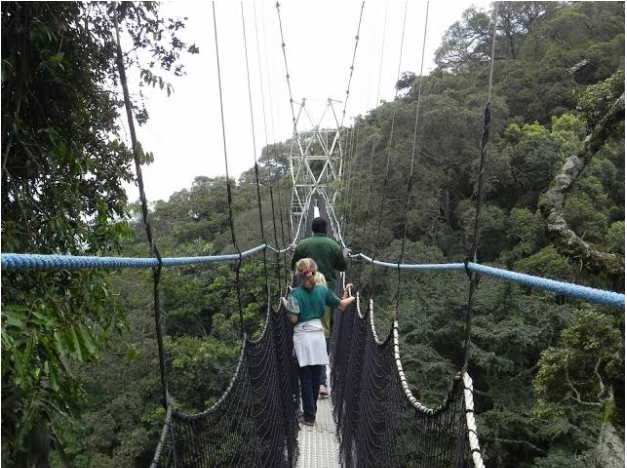
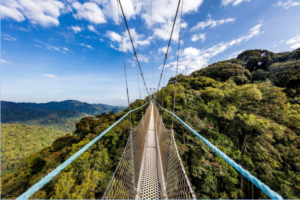
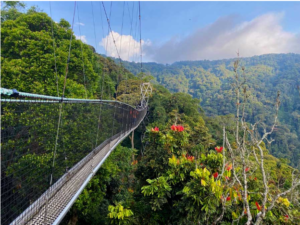
The canopy walkway ranks among Nyungwe’s most thrilling experiences. Suspended 50 meters above the forest floor and stretching 160 meters, this walkway provides a bird’s-eye perspective of the rainforest canopy.
Walking across the swaying bridge reveals a different forest ecosystem teeming with colorful birds, butterflies, monkeys, and unique plants. The experience combines adventure with exceptional wildlife viewing and photography opportunities.
The walk takes approximately 2 hours including approach trails. While not recommended for those with serious fear of heights, most visitors find the experience exhilarating.
Primate Tracking
Beyond chimpanzees, Nyungwe offers specialized tracking for colobus monkeys and other species. The Ruwenzori colobus troops, sometimes exceeding 300 individuals, create spectacular sightings. L’Hoest’s monkeys, silver monkeys, blue monkeys, and olive baboons inhabit different forest zones, offering encounters with Africa’s less-seen primates.
Hiking Trails
Nyungwe maintains 13 marked hiking trails ranging from short 1-hour walks to challenging full-day treks. Popular trails include Igishigishigi (scenic viewpoint), Kamiranzovu (waterfall and swamp), Source of the Nile (following Nile tributaries), and Karamba (excellent primate watching).
Trails vary in difficulty, with some suitable for casual walkers and others requiring good fitness. All hikes are guided, with knowledgeable rangers explaining forest ecology and ensuring safety.
Birdwatching
Nyungwe represents a premier birdwatching destination with 310+ species including 27 Albertine Rift endemics. Dedicated tours depart early morning when bird activity peaks. Target species include Rwenzori turaco, red-collared babbler, and numerous forest specialists.
Accommodation Options
Nyungwe’s accommodation ranges from mid-range lodges to luxury properties near park boundaries.
One&Only Nyungwe House represents the most luxurious option with upscale accommodations, fine dining, spa facilities, and stunning tea plantation views.
Nyungwe Top View Hill Hotel and Emeraude Kivu Resort offer comfortable mid-range options with good amenities and convenient park access.
Budget Options include basic guesthouses in nearby towns like Gisakura. Most visitors spend 2-3 nights near Nyungwe for core experiences without rushing.
Practical Tips for Visiting Nyungwe
What to Pack: Essential items include waterproof hiking boots, rain jacket, long pants and shirts (protection from stinging nettles), warm layers, sun protection, insect repellent, camera with zoom lens, and binoculars.
Physical Fitness: Most activities require moderate fitness. Trails can be steep, muddy, and slippery. Chimpanzee trekking may involve several hours of hiking at altitude. Assess your fitness honestly.
Conservation Fees: Permit prices support park conservation and communities. Fees include chimpanzee trekking permits (approximately $90-100), canopy walk ($60), and guided hikes ($40-50).
Health Precautions: Nyungwe’s altitude means lower malaria risk, though prophylaxis remains recommended. Yellow fever vaccination is required for Rwanda entry.
Combining Nyungwe with Other Rwanda Destinations
Nyungwe integrates well into comprehensive Rwanda itineraries. Most visitors combine Nyungwe with:
Volcanoes National Park for gorilla trekking, creating the ultimate primate safari.
Lake Kivu beaches offer relaxation after forest trekking, providing excellent contrast to Nyungwe’s environment.
Akagera National Park adds classic savanna safari experiences with Big Five game viewing.
A typical itinerary might include: 2-3 days Nyungwe, 2 days Lake Kivu, 2-3 days Volcanoes, and optionally 2 days Akagera.
Conclusion
Nyungwe National Park offers an extraordinary journey into one of Africa’s oldest and most pristine ecosystems. This ancient montane rainforest provides experiences that contrast beautifully with East Africa’s famous savanna parks, immersing visitors in a world of towering trees, cascading waterfalls, mysterious mists, and remarkable biodiversity. The opportunity to track chimpanzees through dense forest, walk among the treetops on the canopy bridge, encounter massive colobus monkey troops, and explore trails where each turn reveals new wonders creates a multi-faceted adventure that appeals to nature lovers, adventure seekers, and wildlife enthusiasts alike.
Beyond the immediate thrills of primate encounters and forest exploration, Nyungwe represents a conservation success story worth celebrating. The park’s protection ensures this irreplaceable ecosystem continues supporting countless species, providing watershed services for millions of people, and offering future generations opportunities to experience primeval African rainforest. Your visit directly supports these conservation efforts while connecting you to natural heritage that has existed for millions of years.
Whether you’re an avid birder seeking Albertine Rift endemics, a primate enthusiast dreaming of chimpanzee encounters, a hiker eager to explore mountain forest trails, or simply someone who appreciates the profound beauty of ancient wilderness, Nyungwe National Park delivers experiences that exceed expectations. This is Rwanda’s rainforest jewel—a destination that rewards curiosity, adventure, and respect for nature with memories and insights that endure long after you’ve left the forest’s enchanting embrace.
Key Takeaways
- Unmatched Primate Diversity: Nyungwe hosts 13 primate species including habituated chimpanzees and massive Ruwenzori colobus troops exceeding 300 individuals.
- Ancient Ecosystem: One of Africa’s oldest montane rainforests, surviving millions of years and supporting exceptional biodiversity found nowhere else.
- Canopy Walkway Thrill: The 50-meter-high, 160-meter-long canopy bridge offers unique perspectives and exceptional wildlife viewing opportunities.
- Birding Paradise: Over 310 bird species including 27 Albertine Rift endemics make Nyungwe essential for serious birdwatchers.
- Accessible from Kigali: Well-paved roads make the 5-6 hour journey comfortable, with spectacular scenery throughout the route.
- Year-Round Destination: While dry seasons offer easier trekking, wet seasons provide lush landscapes, fewer crowds, and excellent birdwatching.
Frequently Asked Questions
What is the success rate for seeing chimpanzees in Nyungwe?
Success rates hover around 60-70%, lower than mountain gorilla trekking due to chimpanzees’ larger territories and mobility. Chimps can travel several kilometers daily. Early morning starts improve chances significantly. Even without chimp sightings, treks offer opportunities to see other primates and experience the remarkable forest ecosystem.
How difficult is chimpanzee trekking in Nyungwe?
Difficulty varies based on chimpanzee location, ranging from relatively easy 1-hour walks to challenging 6-hour hikes through steep, muddy terrain. Moderate fitness is recommended. The high altitude (1,600-2,950m) can affect some visitors. Trails can be slippery after rain, and stinging nettles are common. Porters are available to assist.
Can I do both gorilla and chimpanzee trekking in one Rwanda trip?
Absolutely. Many visitors combine Volcanoes National Park (gorillas) with Nyungwe (chimps) for a comprehensive primate safari. A typical itinerary includes 2-3 days in each park plus travel time. This showcases Rwanda’s primate diversity and contrasting ecosystems.
How many days should I spend in Nyungwe?
Two to three days is ideal, allowing time for chimpanzee trekking, canopy walk, and additional hiking or primate tracking. One day is possible but rushed. Most visitors find 2-3 days sufficient for core experiences.
What is the best time of year to visit Nyungwe?
Dry seasons (June-September and December-February) offer the best trekking conditions with less mud. However, wet seasons (March-May and October-November) bring lush vegetation, excellent birdwatching, fewer crowds, and potentially lower rates. Pack rain gear regardless of season.
What should I wear for activities in Nyungwe?
Wear long pants and long-sleeved shirts for protection against stinging nettles and insects. Waterproof hiking boots with good ankle support are essential for muddy trails. Bring a rain jacket, warm layers, hat, and gardening gloves. Neutral colors are recommended.